Helena Bonham Carter

Helena Bonham Carter from The Guardian

Helena Bonham Carter from The Guardian

The Guardian has published an interview and photoshoot with Helena Bonham Carter. I guess we’re building up for Alice in Wonderland. I love these photos, and the work she has been doing the past several years, she seems more alive and vibrant than ever. While discussing her relationship with her husband Tim Burton, she says “He likes to simplify things, I complicate them. I think we can do this or this or this, optionitis, then I get frozen because I don’t know which one.” Optionitis, boy, can I relate to that.

Photos:
http://www.guardian.co.uk/film/gallery/2010/feb/06/helena-bonham-carter-photographs

Interview:
http://www.guardian.co.uk/film/2010/feb/06/helena-bonham-carter-interview

Sean Hayes

I’ve been a fan of San Francisco based musician Sean Hayes for several years. There is a fragile quality to his voice that I really enjoy, and his music never ceases to move me. He has a new album coming out this Spring, and has released a promo video for a song called Garden. I like it. It’s not quite as accessible as some of his other work, but I’m finding myself going back every couple of days to youtube to hear it again, so it seems to be working its magic.

I’ve always liked the lyrics in his songs, like these from Flowering Spade:

He has a flowering spade
Growing out of his chest
Full of magic and healing
She is a flowering spade
As she moves and she sways
You can see that she feels it

She’s off to dance with the goat boys
He’s of to sail through your wide open ocean
She learned to sing from a siren
He learned to swim from a drop in the water

There are words there are signs
Close your eyes there is magic inside you
Hear this box in your mind
building frames for to trace your desires

She learned to cook from a sailor
He learned to cry in an elephant circus
She found a recipe for flying
He’s growing flowers to understand dying

Rejoice
Hmmm…
Oh ma na na…

Oh oh
Rejoice
Oh ma na na…

Oh oh
Oh ma na na…

Oh oh
Rejoice
There’s no such thing as dying

Oh oh
Rejoice
Does anyone feel like flying

Oh oh
Oh ma na na…

Oh oh
Oh ma na na…

Ooo…

In this video, he talks about the inspiration for the song, and sings it in the studio. Not the best quality, but enough to give you a sense of his style.

Flowering Spade

Not much of a talker, are ya?

iPhone worship, (image from wired.com)

I received my monthly bill for my iPhone from O2, and I actually looked at it this month because it had a special notice attached to it. They were kind enough to tell me that they were no longer going to send me a paper bill each month to “save paper”. I usually choose electronic options anyway, but I like the “option” part of this and the false sense of power in having the ability to make a decision, so I felt a bit robbed to hear that I didn’t even have a choice in this anymore.

After feeling slightly diminished at having yet another physical aspect of my existence sent into cyberspace, I took a moment to read my bill. It revealed what I pretty much expected anyway, I don’t use my iPhone as an actual phone very often; I use iPhone as a mobile computer, and this is exactly why the iPad is aimed at people like me.

Out of my allocated 600 monthly minutes of phone use, I used 14. Out of my 500 monthly text messages, I used 12. That means I’m calling and talking less than 30 seconds a day on the phone, unless it’s February. We don’t have a landline either, so my talking minutes aren’t going there either. I’d like to think that I’m not an anti-social chap, friendly even to a fault in an “American” sort of way. Perhaps other people call me? I don’t even know if that would show up on my bill as minutes? It’s even more distressing if they do, it’s likely that the conversations I initiated, being fair to estimate at 50%, would now be less than 15 seconds a day. When you consider that we are billed for the entire minute of only partial use, it’s possible that I spoke only a total of 14 seconds over 14 separate one second calls on the phone last month, but was billed for the full minute in each of those cases.

It’s probably for the best that I don’t get the physical bills each month. I’d like to think of myself as environmentally friendly and I don’t really need the reminder that I’m not much of a phone-talker anyway. I can see myself leaving the world of “phones”, and switching to entirely data-based communication soon enough, my mobile phone going the way of my landline. Of course, I’ll still end up paying O2, or some other telecommunications giant for the ability to connect with a data plan, but maybe the deal like the one offered for the iPad with AT&T for a limited amount of data each month for $14.99 would be a much better route for me in the future? I feel another shift coming on, I’m not sure how it’s going to work out, but I suspect that even a year from now those 14 seconds a month when I communicate with others is going to be somehow very different.

An Oxford walk, February 2010

Today there was an organised walk of “Queer Oxford”, a topic that I’ve considered someday building a walking tour on (once I’ve completed my English Local History degree). Our friend Jim joined Garrett and I as we met up with the group gathered on Magdalen Bridge. The adorable woman in the wine coloured outfit was our tour guide:

oxford_walk01

Our first stop was Magdalen College, where Oscar Wilde met “Bosie” Douglas:

oxford_walk02

We then went to University College…

oxford_walk03

to see the amazingly beautiful Shelley Memorial, dedicated to the famous poet. Shelley briefly attended the college, and was then expelled from it for writing a pamphlet on Athiesm. The poet drowned, and it is this that is captured in the sculpture:

oxford_walk04

We had coffee at the Vaults in St Mary’s Church, which is next to the beautiful Radcliffe Camera:

oxford_walk05 oxford_walk06

We walked along the street:

oxford_walk07

Over to Jesus College, Garrett’s Alma Mater.

oxford_walk09

We went inside the chapel to see the memorial to Lawrence of Arabia who was also a student at the college. There was a small orchestra practising, very romantic and beautiful:

oxford_walk08

We walked up to the Ashmolean and the theatre district, and talked about some of the great artists and actors who had visited Oxford or made it their home over the centuries.

oxford_walk10

While the rest of the group continued on to a pub, we split off and walked back towards Jim’s college:

oxford_walk11

We passed one of my favourite shops in Oxford, Scriptum. It is filled with the most wonderful things; fine stationary, pens, Venetian masks, handmade paper, antique books, prints, and a thousand other interesting things:

oxford_walk12 oxford_walk15

We had a nice cup of tea in Jim’s room, then he gave us a tour of his college. This is an intriguing passageway at the college gardens which seemed a bit magical after the day had faded to darkness:

oxford_walk13

We went out for a lovely dinner, and as we were walking along High Street we saw a group of “chaps” out for a night on the town:

oxford_walk14

This is all very tongue and cheek, and they looked the part and looked as if they were having a great time playing it. My favourite magazine is dedicated to this type of sensibility, do check out: The Chap. Garrett said the smell of the pipes was very nice, and when asked, said that I could have a pipe if I wanted one. Hmmm. It’s very tempting.

We returned home and watched Maurice as the perfect end to a lovely day.

Doom, and other reminders

My next essay is due in less than three weeks, and I’m struggling with it more than I think I have with any other essay. It’s not because I don’t like the subject matter, I think the problem is that I’m spoiled for choice and have so many interests connected to the subject that it is hard for me to sort out what I want to focus on; and more specifically, how to properly answer the question:

“Choose three parish churches with substantial medieval fabric and furnishings. Analyse the medieval elements of the buildings and their fittings and discuss their use for the local historian as historical evidence.”

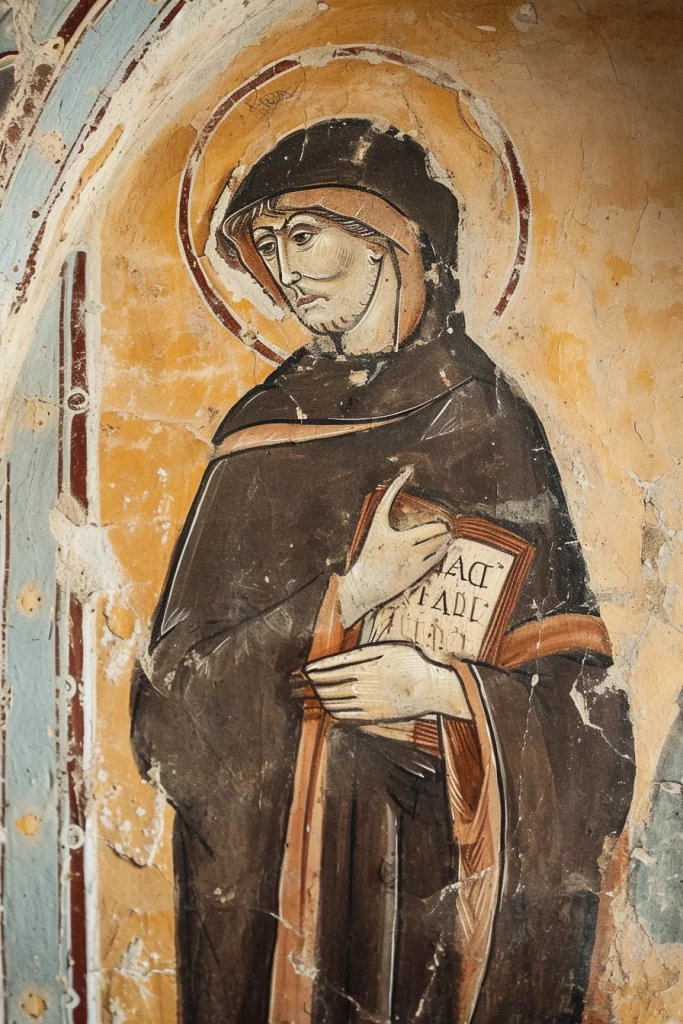
Here’s my chance to write about a subject that really interests me: Medieval church architecture and decoration. My first reaction to the question was to try to find a theme to connect three churches, rather than just randomly choosing three churches with no apparent connection. The theme that most excited me was of early church wall-paintings: should I focus on how certain subjects such as St Christopher, the Last Judgement or “Doom” as it was called, or local saints might were depicted in wall-paintings? During the English Reformations, the once heavily painted churches were whitewashed, covering up the paintings which were considered idolatrous “popery”, not suitable for Protestant churchgoers focused on the Word of God. Some of these wall-paintings have been uncovered by “restorations” beginning mostly in the Victorian period when the “Anglo-Catholic” or “High Church” movement became popular in England. Layers of whitewash were removed and the underlying paintings, in varying degrees of success, were revealed after several hundred years. There is a wonderful website devoted to these wall-paintings called “The Painted Church”:
http://www.paintedchurch.org/

For the past two weeks I’ve been researching churches, especially in Oxfordshire, and have narrowed down the list to half a dozen candidates. I’ve also reflected on the question and have decided that if I only focus on wall-paintings, I’ll probably do a poor job of answering the question. The focus of this course is generally to view history from the local perspective, especially to consider the effect on the local community of historical events. With this question, I’ll need to discuss how the churches reflected their communities, and my story will likely be too limited if I focus only on wall-paintings.

Unfortunately, some of the churches I would most like to write about don’t have enough medieval content to qualify for the assignment, such as my beloved little church in Binsey; I would love to talk about the healing well that attracted so many pilgrims during the middle ages, but unfortunately, the well was completely rebuilt during the late 1800s, as shown here in a photograph from the blessing of the well during the Binsey fete from 2009:

binsey_fete25

Last weekend, my friend Liz was kind enough to drive me out to see two churches just outside of Oxford. South Leigh and North Leigh are both famous for some of their architectural details, South Leigh especially for its collection of wall-paintings.

St James the Greater, South Leigh

southleigh01

There has been a church here since Norman times, the wall-paintings are from the 14th and 15th centuries. They have been restored many times, and to my eye, so very much so that I’m inclined not to use the church for the essay because of the heavy-handedness of the restorers over the years. Nevertheless, the paintings were breathtaking, and I’d like to share them with you.

southleigh02

The most spectacular image in the church is the Doom which, typical for this type of painting, covers the chancel arch. Two angels usher the newly arisen to their fates… heaven or hell awaits.

southleigh04   southleigh10

For those on their way to Heaven, St Peter awaits to welcome you:

southleigh06 southleigh07

For those on their way to Hell, the gaping mouth of Hell awaits you:

southleigh11 southleigh14

On another wall, St Michael weighs souls to determine each person’s destination. This painting is the most heavily restored, and in fact, completely repainted painting in the church. There are actually two versions on top of each other. The first from the 14th century can still be seen peeking through the (probably Victorian) much larger over-painting, although some sources suggest that the second image is older, perhaps from the 15th century:

southleigh19

In this close-up, you can see the older St Michael near the newer weighing of the scales which shows the Virgin Mary intervening by placing her rosary beads on the scales to help weigh the scales towards salvation for the souls.

southleigh20

On the other end of the scales, devils unsuccessfully try to weigh the scales towards damnation:

southleigh21

A wall in the chancel shows the Virgin Mary:

southleigh17

In the north aisle, a rare image of St Clement with an anchor, his symbol:

southleigh16

An “unrestored” Seven Deadly Sins shows just how little might be found to work with, this image was let be probably because there was not enough information to reveal the subject matter to the Victorian restorers. Other similar images have been found to suggest the probable subject, and the Hell Mouth at the bottom of the image helps to explain what was once above:

southleigh24

St Mary’s, North Leigh

Just a few miles north of St James is St Mary’s in North Leigh. The wall paintings here are on a much smaller scale, and only a Doom exists above the chancel arch. While also restored, I find these images more natural and appealing:
northleigh01 northleigh02 northleigh03 northleigh04

I think my favourite part of these images is the devil with gills, which reminds me of the Creature from the Black Lagoon.

It’s important to remember the setting in which these paintings were viewed. Most parishioners were illiterate, and even for those who could read,  a copy of the Bible would have been incredibly rare. Only the very wealthy might have had a book or hours or missal. The Mass would have been performed by priests in the chancel, mostly, if not entirely, hidden from the view of the people gathered in the nave. Mass would also have been said in Latin, so much of the meaning of the words would have been unknown to those gathered in the church. There would probably not have been benches, so the people would gather usually kneeling or sitting on the floor. These paintings would have conveyed the main theological messages, reminders of what it meant to live a good life, and the consequences of what awaited those who did not.

“Analyse the medieval elements of the buildings and their fittings and discuss their use for the local historian as historical evidence.”

Hmmmmm.

This week, another friend is taking me to see a few other churches. I’m particularly interested in the paintings in Shorthampton because they show two unusual saints, both related to the working laity. I might choose to do St Michael’s at the North Gate in Oxford because it has some really interesting features including a Sheela-na-Gig and an unusual stained glass window showing Christ crucified on a lily. The only church I feel certain of at this point is nearby Iffley, which is considered one of the best examples of Norman Romanesque architecture in the country. Hopefully, I’ll have this all sorted by the end of the week, and will have some lovely photographs to share.

See the entire gallery of photographs from South Leigh here: http://www.robertmealing.com/photography/recent-photographs/south-leigh/